By Rev. Dr. Jim Lawrence
Some might say there’s even a prior question to ask, which is “What is a polity?” And the simple answer is that polity is a governance theory. From its Greek roots (poleis), we get the common word “politics,” and in governance theory, it refers to the specific form of political or social governance. Thus, polity usually proceeds by identifying the core politically organized unit, such as a state, country, church, or corporation, by which resources are managed, maintained, and controlled.
In church life and across all the many denominations in Christianity, we find the classic dividing line between vertical and horizontal polities. The word Episcopal (from the ancient Greek word episkopos that became the early church word for bishops) is a vertical form with power at the top that is mediated down through various organizational forms. The word congregational stems from old Latin congregare, which means to herd together. Thus, every “herd” is a congregation! Congregationalism is a horizontal form of power that gives voice and vote to all individual congregations. In a congregational denomination, there is no higher power that can come in and tell congregations what to do. The only power that exists from above is that a denomination could choose to disassociate from a particular congregation, but that decision also would be made on a wide horizontal basis.
The Swedenborgian Church of North America is congregational and horizontal and is the most radically horizontal of all the Swedenborgian branches of the New Church on earth. As such, our denomination is democratically governed by rank-and-file membership through a representative government headed by a General Council, which is also democratically elected through the voting system of the denomination.
The month of June means we are headed for our annual convention where our polity is in action at its most visible and functional every year. Many decisions are made through our democratic polity. The top governing body is the General Council, which is comprised of thirteen elected members and the chair of the Council of Ministers. The officers of the General Council oversee the business sessions where voting members in our congregational polity will make many decisions. Voting delegates are determined by our regional Associations who are allotted delegates in a proportional formula based on the membership totals in Associations, which themselves are legal constituent societies, usually having their own 501(c)(3) status, within that geographic region.
There are also five Standing Committees comprised of three or six people who are also elected by delegates to serve terms. These are working groups that function throughout the year handling responsibilities for financial functions, information management and publishing (online and print), educational events and support resources, and nominations for the upcoming convention.
The other important body is the Council of Ministers, who have powers over the standards and process for ministry training and who provides counsel and guidance for the spiritual work of the denomination. Ordained clergy have automatic voting rights at the summer convention. Wherever you are, you can show up at these meetings virtually by registering as a virtual participant, and you can also attend some wonderful Mini Courses!
—Rev. Dr. Jim Lawrence
Read the full issue of the June Messenger.
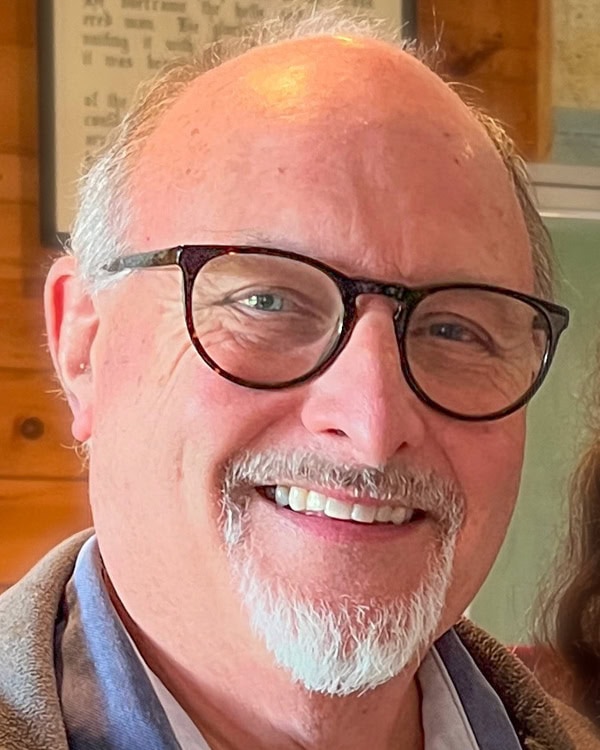
Meet Jim Lawrence
Rev. Dr. Jim Lawrence is the president of the Swedenborgian Church of North America. He was the dean of the Center for Swedenborgian Studies for 21 years prior to being elected President in 2022.