By Tamra Hunter and Pastor Paul Deming
This year we offer two different perspectives on the same event: The CSS Winter Intensive. This is a gathering of CSS students that includes those on the ordination track, those training to be Licensed Pastors, and those earning a certificate in Swedenborgian Studies while still discerning their path forward.
2026 Swedenborgian Winter Intensive by Tamara Hunter
This year’s 2026 Swedenborgian Winter Intensive, Church Polity and Practice, fulfilled expectations as an immersive learning experience filled with enriching instruction, deep discussions, and community fellowship. Reflecting upon it now brings back images of the beautiful Bay Area, the serenity of the churches, the profundity of Swedenborg’s doctrines, and the kind dispositions of all the people involved. I was privileged to be a part of the four-day exploration and to learn more about the history and structure of the General Convention Church (d.b.a. The Swedenborgian Church of North America) and its people. Our cohort of eleven participants enjoyed a productive and fun time together in Berkeley at Hillside Church, the Swedenborgian classrooms and archives at the GTU campus, as well as the historic Swedenborgian Church of San Francisco.
Our estimable instructors included Dr. Rebecca Esterson, Dean, Center for Swedenborgian Studies; Rev. Dr. Devin Zuber, Associate Professor of American Studies, Religion, and Literature; Rev. Junchol Lee, Senior Pastor, San Francisco Swedenborgian Church; and Jennifer Lindsay, Treasurer, Swedenborgian Church of North America, all leading informative and well-versed discussions. This illuminating course led not only to deeper perspectives but also to deeper connections between one another as we explored Swedenborgian theology, practice, and the enjoyment of learning together.
Our schedule began with a lovely, clear day at the Hillside Community Church, where Pastor Tassy Farwell serves as a licensed pastor, and who also attended the Winter Intensive as a participant. We began there with an examination of Church history led by Rev. Dr. Zuber and Dr. Esterson, along with introductions from our eleven participants. Our short biographies revealed a diversity of experience and backgrounds as well as many common bonds of spiritual inquiry and dedication. Many of us traveled from afar, with considerable efforts to arrive, and later challenges getting home as one of the biggest storms of the season found its perfect timing! But efforts were rewarded by calm weather in the bay for the whole of the four days, with mostly clear days and moderate temperatures.
It was a pleasure to see the simple but serene composition of the Hillside Church in its green, sloped natural landscape with its impressive bay views. It is a valuable place not only for Swedenborgians but also for the broader community as a forum for community events, meetings, weddings, and learning opportunities. Some of us returned in the evening for a well-attended and fascinating presentation on “Swedenborg and Shinto” by Dell Rose, which also provided an opportunity to meet some of the locals. Hillside Church is clearly an important asset to its members and the larger community as a welcoming, inclusive, space for connection and development.
It was an ideal place to begin our initial conversations, focusing on the nature of the Swedenborgian Church, part of our guiding reflection for the course duration. Readings included text from Marguerite Beck Block, James F. Lawrence, and Swedenborg—notably “The Church” in New Jerusalem and Its Heavenly Doctrine, §241–248 which includes:
The term ‘church’ is applied to the regions where the Lord is acknowledged and the Word exists, since the essentials of the church are a love for the Lord that comes from the Lord and a faith in the Lord that comes from the Lord, and the Word teaches us how we need to live in order to receive this love and faith from the Lord.”
We focused on this text in group discussions, and many proposed the idea that the contemporary church includes characteristics of inclusivity, creativity, positive actions, and a will and dedication toward social justice. This theme of the church today is extended through the Winter Intensive as a focal point of personal and institutional development.
Our second day brought us an introduction to the elegantly rustic and impressively historic Swedenborgian Church in San Francisco. We were well guided through some of the church’s fascinating history and impressed to learn about its nearly singular designation (along with the US Capitol) as a Level Four Landmark Status National Historic Landmark. I was impressed to learn about its connections to the famous naturalist John Muir, a close personal friend of founding minister Rev. Joseph Worcester, and to see the conch shell at the altar where Robert Frost was baptized. The worship hall and rooms are emblematic of the Arts and Crafts aesthetic, blending such natural elements as wood and stone with fluid lines and muted colors. Many of the naturalist paintings in the church also came from a friend of the church, the well-known painter William Keith (November 18, 1838 – April 13, 1911), whose work represents California in its natural beauty.
Our topic for the day included a review of the General Council and church organization by Dr. Esterson, whose background and experience with the church added introspection and a personal perspective. We read the Constitution and Bylaws of the Swedenborgian Church, the Standing Resolutions, and reviewed the 2024 Journal, helping us understand the depth of church history and its current status and structure. Jennifer Lindsay, treasurer of the Swedenborgian Church, also gave a remarkably knowledgeable review of the funding structures in the organization, which helped all of us understand the essential financial underpinnings of the church. After a delicious lunch graciously prepared by Rev. Junchol Lee (including a signature kimchi), we were treated to his presentation regarding ministerial ethics, professionalism, and conduct. It was an ideal day for learning about the history of the church with some of its most knowledgeable representatives and exploring the iconic physical building itself.
On our third day, we returned to the Berkeley GTU campus at Holbrook Hall with further considerations of the future of the church and its ministry. We discussed Rev. Dr. Jim Lawrence’s sermon “Social Justice Is the New Jerusalem,” which focuses on Swedenborg’s Revelation Unveiled §905 and the dimension of justice in the image of the new church: “the city is laid out foursquare means the justice in it.” We also reflected on George Dole’s article on the 2015 Annual Convention theme, “Toward a Newer Church” (from the Messenger, September 2015), which captures another essential Swedenborgian theme that resonates when he says, “Regeneration is, after all, a transformation of consciousness. I believe this adds up to a call to each of us individually and to our church.” Each of us has been called upon to interpret our own process of regeneration and our ability to bring justice into balance in our lives.
After our studies, we toured the eminent Swedenborg Archives located in the GTU basement, where we were privileged to view many important original manuscripts, including signed copies of original Swedenborg texts. After a delicious lunch from an excellent local restaurant, we had the special opportunity of meeting at Rev. Dr. Devin Zuber’s home in the Berkeley Hills. We are thankful to our host, Devin, for offering his home as a special setting for our individual class presentations. Participants described their own unique visions for creating meaningful service and contributing to the causes of social justice and ministry. Many of us are already engaged in work with churches and Swedenborgian education, and it was a moment to articulate our plans and hopes. The conversations were illuminating, the views incredible, and to top it off, we even shared some delicious locally baked fruit pie!
We concluded the adventure-filled week with a return to the Swedenborgian Church, where we reflected on the Church Polity and Practice questions from the course, as well as our own personal experiences. The final excursion concluded with a walk and tour at the Presidio with its impressive vistas of the bridge and Alcatraz Island. Most importantly, it provided a time for reflection on the principles learned and community bonds forged throughout the week.
For me, the four-day intensive was an edifying, informative, and even inspiring experience that has deepened my personal commitments to service and learning. The material reviewed and the time spent with professors and church leaders is invaluable. I am so pleased to have had the opportunity to meet new colleagues and friends with common goals, centered on the Swedenborgian Church of North America and its practice. The theme of the New Church resounds as we move through the challenges of our time with a dedication to the “good fruits” that, as Rev. Dr. George Dole noted while translating Revelation Unveiled for the New Century Edition, are also known as the “good of love.” “Section 934 tells us very clearly: again in Standard Edition language. . . ‘fruits’ signify the goods of love or charity, which are called in common speech good works.” (“A Call,” the Messenger, September 2015) I am heartened to know we can all enjoy the daily practices of love and charity and contribute in meaningful ways that enrich our lives and those of others.
The Winter Intensive: A Pastor’s Perspective by Pastor Paul Deming
This year, I was delighted to be invited to join several of my colleagues in various stages of their spiritual and educational journeys, and to enjoy the study, wisdom, and instruction by our esteemed professors, Dr. Rebecca Esterson, Dean, and Rev. Dr. Devin Zuber.
As we delved into the “ghost” of churches past, I learned that our faith tradition is the only Christian denomination that has a distinction of both opening the Word at the beginning of each service and closing it at the end. It has been this way since the very beginnings of our church societies.
Like many mainline protestant traditions, our history was not exempt from quarrels and divisions. Some churches, musicians were hidden behind a screen because it was believed they would detract from worship. That is why many churches from different denominations have a choir loft, and often an organ, in the back balcony, out of sight of parishioners. We visited the San Francisco church (built in 1895 and one of the oldest still in use in San Francisco), where, in decades past, the choir sat up front, but was separated from the congregation with a partition. Thankfully, in the services of our time, most partitions have been removed, and those with a song in their heart can be seen and heard.
I was interested to learn that our particular denomination did not break away from the General Church (as with most reformed traditions) but, rather, the General Church (as it is now known) broke away from our sect (the Swedenborgian Church of North America), primarily over the desire to form a more episcopalian hierarchy, and the belief that the writings of Swedenborg are in fact a third testament—a belief we do not hold.
Another group broke off from the General Church, known as Nova Hierosolyma (New Jerusalem), believing, further, that this third testament had an inner sense of its own. To this day, each group has dedicated followers who worship in the way they know best, and often members of different branches welcome opportunities for combined gatherings of lectures and special events. It is not unusual to see members of both the General Church and Nova Hierosolyma at our conventions.
Among the readings prescribed for this course were several chapters from The New Church in the New World by Dr. Marguerite Beck Block (originally copyrighted in 1932 and again in 1960). I was interested in learning about the Boston Society because it is the location of our next Convention (June 2026). It is one of our oldest societies with a history that spans over two centuries.
Each of our societies has a rich history involving a small group of people dedicated to learning more about Swedenborg’s view of a God who does not punish but, rather, desires a loving relationship with all humankind, and learning about concepts of ecclesiology that transcend church walls, denominations, and religious institutions.
So where does the Swedenborgian Church of North America (SCNA) fit into the current religious landscape? There are several distinctions within the SCNA that determine its uniqueness among Christian denominations. One might describe its view of God and its primary theological focus as inclusive. Rather than three separate persons of the Trinity, our faith tradition holds that there are three aspects of one God in the person of Jesus Christ. Also inclusive is the welcoming of female ministers (starting in 1975 with Rev. Dr. Dorothea Harvey) and the welcoming of openly gay ministers (starting in 1997 with Rev. Dr. Jonathan Mitchell). While this positions the SCNA as progressive, its inclusivity expands beyond its own institutional walls in proposing that people of other faith traditions or no faith at all who live a life of love and selfless service to others will be welcomed into heaven. The SCNA positions itself as a member of a larger community seeking tolerance and acceptance among people of faith and is a member of the National Council of Churches, USA.
Finally, rather than restricting its reverence for the Word to a literal translation, our faith traditions hold that there is an inner sense or spiritual correspondence to much of Scripture. This, for me, alleviates the cognitive dissonance of trying to reconcile a wrathful and violent image of God with the life Jesus lived and demonstrated for his followers. Any way you look at it, the Swedenborgian Church of North America offers relief from traditionally restrictive church dogma and encourages spiritual inquiry and freedom of thought within a Christ-centered liturgy, rooted and strengthened in usefulness and service.
As a final exercise, attendees were asked to comment on the future of the Swedenborgian Church. Some focused on the slow transition from building-oriented societies to smaller groups enhanced with digital technology, allowing for worldwide participation from the comforts of home. Others mentioned non-traditional services like the Garden Church in San Pedro, California, an outdoor, streetside, garden church that offers free community meals and opportunities for participant-gardening and home-grown vegetables. Still, others mentioned the re-purposing of church communities to be welcoming to the growing number of spiritual but not religious people through nature conservation and eco-friendly outreach programs. A conscious shift towards a more social-justice-oriented approach was discussed with a caveat that while politics should not (and legally cannot) be preached from the pulpit, a loud and clear protest against the inhumane practices and hateful policies of authoritarianism is not only allowed but a socially responsible calling of the church universal.
We finished the course with a visit to the nationally acclaimed Presidio Park of San Francisco and walked along the beach at the southern tip of the Golden Gate Bridge. I was struck by the awesome power of the waves, the beauty of nature, the exotic plants and palms and pines, the wild parrots, and the sea cranes. In the same landscape, there stood a monumental wonder to the achievement of creative architectural minds and the hard-working hands of the bridge builders. There was a cry within me that said, “Let everything that has breath, is alive, and moves, praise the living God!”
May we, the believers, the ones who proclaim the goodness of God, bring our creativity and hard-working hands to offer the golden bridge of love to a despairing world! There is an undeniable harmony in nature, a resiliency that offers a reflection, its correspondence to heaven (even to the smallest DNA molecule), the beauty of God in the marriage of divine wisdom and love, in the light that transcends the soul, and the warmth that touches our innermost being. I felt so lucky to be alive that day to witness such a glorious sight and experience it—mind, body, and soul.
In summary, the Winter Intensive brought me more than the California sunshine! It offered a wonderful opportunity to expand the historical and present-day understanding of our beautiful denomination, as well as the chance to dialogue with more learned minds and perspectives. I returned home to record snowfall and cold, but carried with me the warmth of the memories and experiences of sharing we all enjoyed. To my fellow students, instructors, and all who worked to make the January Intensive possible, and to the Center for Swedenborgian Studies, my sincerest thanks. My life will be forever better because of you!
Read the full issue of the May Messenger.
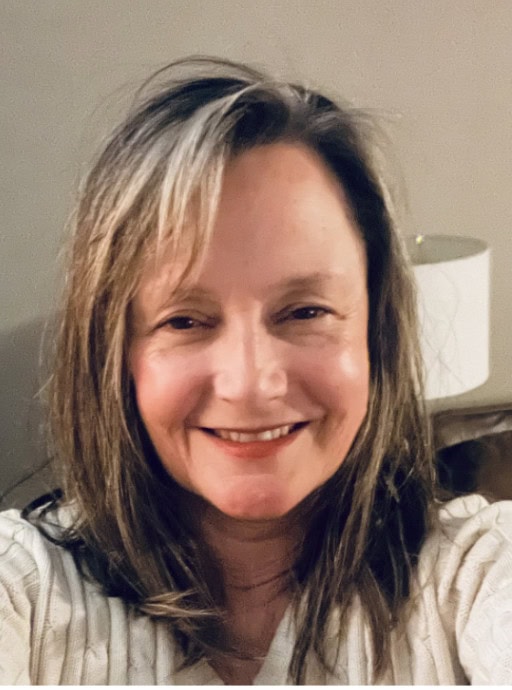
Meet Tamara Hunter
Tamara is a full time teacher of students with disabilities for Santa Fe, New Mexico public schools with Master’s degrees in Special Education and Cultural Literary Theory from the University of New Mexico. She worked many years in New York City and has an entrepreneurial background as co-founder of Terrapin Restaurant and Calamus Retreat Center in the Hudson Valley of New York. She is pursuing the Certificate in Swedenborgian Studies in order to enrich her teaching practice and develop new positive approaches to career and life.
Meet Pastor Paul Deming
Paul was installed as the Licensed Pastor of the Garden Chapel Sanctuary in 2016. He is married to Suzy and the father of two grown sons and grandfather to one grandson. Paul is on the ordination path and is completing his seminary training at Eden Theological Seminary in St. Louis. He has served on various committees, including Education Resources and the Nominating Committee. Paul is a singer/songwriter, a published composer, and a lover of the arts.