
Compiled By Rev. Jay Barry
During their annual meeting in 2024, the Council of Ministers created a chaplaincy committee whose purpose was “to advise the denominational endorsing officer for the certification of chaplains, as well as supporting our chaplains through professional and educational development.” Rev. Jay Barry is the chair of this committee. In honor of October being National Chaplain Appreciation Month, I reached out to him and asked if he would be willing to submit a piece on chaplaincy to the Messenger. The following has been compiled by him and contributed to by five chaplains in the Swedenborgian faith tradition.
Understanding Chaplaincy
By Rev. Jay Barry
To better understand chaplaincy, let’s look through a Swedenborgian lens for a moment.
Think of how the sun shines upon the earth in the same way the Lord shines upon all creation. The warmth and light emanating from the sun symbolize love and truth emanating from the Divine. This is the source of all wonder, life, and beauty, shaped in countless forms. Creation is a manifestation of love and usefulness, and every human being among us is included.
And yet, the world below the sun is ever-changing. The atmosphere of human life can be calm and reassuring, but it is also stormy and sometimes terrifying.
We respond in different ways when life is frightening. Some run, some hide, and others dissociate.
Chaplains, however, are trained to walk into the storm of human suffering, to support those who are injured and comfort those who are dying.
Chaplaincy is a practice that began in the military as we supported soldiers in the storms of war. Now, it extends to hospitals, schools, organizations, and communities. The training to become a chaplain is structured via the Association of Clinical Pastoral Education (acpe.edu). The Center for Swedenborgian Studies requires that each of our divinity students must take one program of Clinical Pastoral Education (CPE) to be ordained, which helps them learn to support the vulnerable and witness the importance of spirituality in human existence.
Chaplains see human suffering firsthand and learn about compassion—light from the Divine—shining through the storm and comforting the injured and those who are helping them.
Emotional Awareness
By Rev. Kathy Speas
People do not mirror themselves in running water, they mirror themselves in still water. Only what is still can still the stillness of another being. – Taoist wisdom
So simple, yet not easy, to still our minds. An effective chaplain presence is a still, calm, centered, solid, grounded presence. Being fully present is hard.
Emotional Awareness in Chaplaincy begins in CPE, with supervisors and peers challenging us as to what might be going through our consciousness landscapes when we are interacting with patients and families.
We confront fears. We encounter unresolved wounds and old family dynamics. We face our judgmental shadows. We become aware of how our own needs in dealing with conflict, anger, and strong emotions color how we respond to those issues in others. Chaplains never overcome it all; we just learn to be aware and try to avoid reacting from our wounded places.
I remember an African American woman who was so furious that the staff turned to the chaplain for help. Furious at the hospital, raging at the doctors, lashing out at the nurses, enraged at her family, boiling angry at everyone around her. I tried my best to calm her down, to no avail. I came to realize I was reacting to my own discomfort with anger, my own old messages that anger was to be avoided at all costs (especially in women). I needed to hold space for her rage at being discriminated against all her life by a biased health care system, her anger at a body that was in pain, her fury at being abandoned by loved ones. I needed to validate her experience, not try to redirect her because I was uncomfortable with anger.
Chaplaincy serves up many dimensions of suffering that arouse our own emotions. Sympathy is feeling the pain of another. Empathy is being present to the pain of another without entering into it. Some wise sage advised to stare into the suffering of the other, so that when they are ready to face it, they are not alone.
I Have Learned to Deeply Appreciate
By Rev. Robin Childs
It is a touching reality that we walk toward those who are dying, declining, who are in anticipatory grief or have reached grief, those who are in shock from trauma, as well as those who are angry with the reality they’re stuck in the middle of with nowhere to escape to, and sometimes those who are really angry with God.
I find it humbling to be with people who are facing trauma by leaning on family, leaning on God through prayer, and, to a degree, leaning on us.
What I find truly amazing, beyond the beautiful role we fill of being with the hardest of feelings and situations, is the amazing attitude of so many of the people we get to accompany. The myriad acts of kindness and support family members give each other as their loved one declines. I am also blown away by the positive spiritual outlook people develop in the worst of situations.
There was a woman in the later stages of multiple sclerosis, losing the ability to physically do anything. I felt at a loss for words. Falling back on my intuition and training, I simply asked her, “How do you do this? You seem so peaceful.”
Her answer was so touching. She said, “I have learned to deeply appreciate every friendship, every ability I still have, every breath I still get to take, every moment with family.” It reminded me how often these people we seem to be there to serve are serving us instead.
A toast to those of us called and trained to step toward pain and grief. However, my real love for this job is for the people who, by their courage and selflessness, remind me how precious life is. Of how these people in pain have so much to give us once we arrive at their bedside.
The Role of Prayer in Chaplaincy
By Rev. Lisa Solwold
Prayer isn’t magic, it’s alchemy. Prayer changes us, and how we engage with the world around us. Prayer gives voice to our deepest desires and has an impact well beyond our understanding. Within the act of prayer is the yearning to be witnessed, to feel whole, and to feel the presence of the Sacred. – Unknown
When people picture a hospital chaplain, they often imagine someone moving from room to room, praying with each patient. The reality is much more nuanced. Prayer is one tool among many in a chaplain’s practice. It’s not automatic and never assumed. It emerges when it fits and is set aside when it doesn’t.
Chaplaincy is built around meeting people where they are, spiritually and emotionally. Patients and families come from a variety of backgrounds: devout, secular, spiritual-but-not-religious, actively questioning, or even grieving a faith they once held.
A visit involves deep listening, hearing beyond the words. Noting both what’s being said and what’s not, as well as what carries a particular charge or anguish. It may also involve helping a patient or family process a diagnosis or simply sitting in silence, being a calm presence in a hard moment.
Most chaplains are trained to ask rather than assume before adding the ingredient of prayer. In doing so, it can be a vital source of comfort, especially in moments of fear, uncertainty, or loss. It can be a powerful way to close a visit.
It is through conversation that a chaplain gains insight into where a person is struggling and provides clues to crafting a personal prayer. Additionally, asking the patient or family member: “What do you most need from God today?” invites them to give voice to the focus of their need. The prayer becomes a collaboration between chaplain, patient, and/or family.
The Art of Compassionate Listening
By Rev. Kit Billings
What are some of the ways you feel loved by another person without that person ever saying the words, “I love you”?
It happens when someone chooses to listen to us with genuine care and compassion.
As a professional chaplain who has worked in healthcare and spiritual care for many years, I have experienced countless ways people answer this question. Yet one response seems remarkably universal: we human beings have a fundamental need to feel heard, seen, respected, and understood through carefully attentive listening.
One of the sweetest gifts we can give another human being is to listen consciously and compassionately while believing in and valuing that person’s inherent dignity and potential for wholeness.
James Miller and Susan Cutchall, in their book, The Art of Being a Healing Presence: A Guide for Those in Caring Relationships (2001), emphasize an important truth about caregiving: the caregiver’s task is not necessarily to fix, rescue, cure, advise, persuade, or even make another person feel better. Rather, healing caregivers seek to create a relationship and environment in which the other person can encounter his or her own inner resources, meaning, dignity, wisdom, and capacity for healing.
Healing listeners listen with more than their ears. We listen with our eyes, facial expressions, posture, and presence. We communicate, often without words, that the person before us matters. Healing listening also requires silence…sometimes the most compassionate thing we can do is simply remain attentively present, willing to be led by the heart and mind of the person before us.
Silence can create sacred space. It also involves active listening—reflecting back what we hear, asking gentle questions, clarifying rather than assuming, and paying attention not only to the words being spoken but also to what may be underneath those words. For me, however, healing listening is ultimately grounded in trust: the conviction that God is already present and at work in the life of the person sitting before me. My role is to become sufficiently present so that I can participate in that sacred process rather than getting in its way.
A chaplain may not be able to remove someone’s pain, but we can help make it possible for that person to carry their own pain without carrying it alone. And we may not be able to give another person meaning, but we can listen carefully enough that the person begins to discover meaning emerging from within. This is why compassionate listening is much more than a communication skill. It is an act of patient reverence. I am saying, in effect: Your story matters. You matter because you are you.
Ultimately, compassionate listening invites us into a different way of being with one another. That may be one of the most sacred gifts we can offer.
We discover that sometimes the most healing thing we can give another person is not our wisdom, our advice, or our solution—but simply our loving and faithful presence. Truly, to listen deeply is to say, without ever speaking the words: “I am here. I see you. Your story matters. You matter. And for this moment, you do not have to walk through this alone.”
Read the full October 2026 issue.
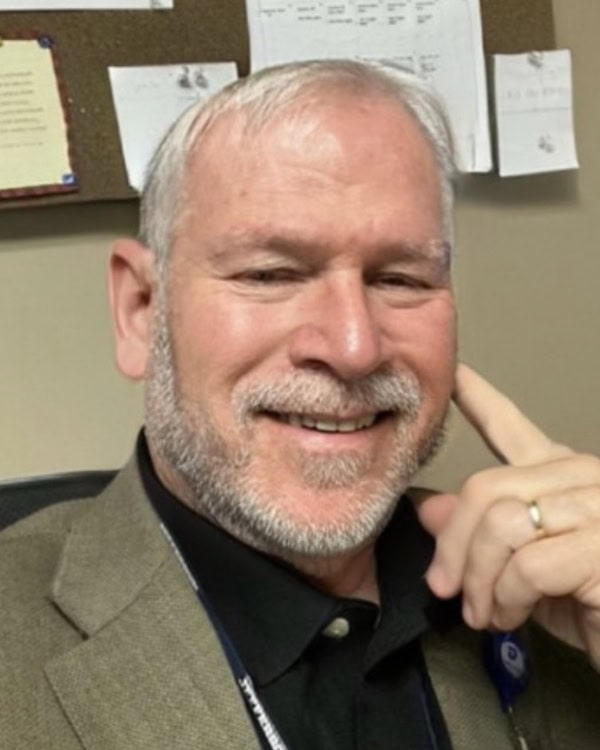
Meet Jay Barry
Rev. James “Jay” Barry was ordained into ministry by the General Church of the New Jerusalem in 2009 after decades as a business owner in Manhattan. His path in ministry has led him to the doorstep of the Swedenborgian Church of North America, and he was inducted into that ministry in 2024. He is married to Barbara Barry, and together they have raised five children into adulthood. They continue a life together devoted to learning and dialogue with others. Rev. Barry became a chaplain in 2016, where he continues to work to this day.