By Rev. Dr. Jim Lawrence
Swedenborg initially sought anonymity with respect to his spiritual world travels. The goal was to spread the new good news to the world, not to make a name for himself. He dove into preparing the books that are now legendary, but he published anonymously for eighteen years to keep the attention away from himself. The author explicitly claimed to have been graced with the ability to enter the spiritual world fully and hold discussions with spirits and angels, and he felt staying anonymous kept the focus where it needed to be. But it turned out that his new abilities ended up being impossible to hide completely due to Swedenborg’s new capacities coming into his everyday life.
In short order three events unfolded: his now-famous “seeing” the Great Stockholm Fire of 1759 from 300 miles away at a dinner party on Sweden’s west coast city with several notable citizens; Queen Louisa Ulrika lightheartedly asking Swedenborg to give her regards to her deceased brother and Swedenborg returning a few days later with a message from him that caused her to nearly faint as she exclaimed no one except her deceased brother knew what Swedenborg had just shared; and after a foreign ambassador’s widow approached him for a similar favor to stave off a creditor hounding her for a bill she was certain her husband had paid, Swedenborg showed up while she was entertaining guests, and he went upstairs and fetched the “lost receipt” from a secret compartment in her husband’s desk. These dramatic stories all followed one another in short compass, and together they unmasked Swedenborg’s anonymity as the author of the much-talked-about spiritual books.
Something similar happened regarding these books and their author long after Swedenborg’s death. Swedenborg was in charge of publishing his books and distributing them as he saw fit—books exceedingly critical of the established Christian traditions. He sent his books to influential bishops and clergy of Catholicism and the Reformation churches, but being careful to maintain his anonymity by arranging for them to be sent via his publisher, various booksellers, and trusted contacts without his name being attached in any way.
As could be predicted, these books made very little impact upon their recipients because they were searingly critical of what the recipients believed. But something interesting happened on the way to the cultural forum, and it is perfectly illustrated by a story told by a philosophy scholar at a major state university in the South who became interested in Swedenborg. He poked around his university to find others who knew about him, and what he discovered is that no one in the religious studies department knew anything about Swedenborg, and everyone in the various literature departments knew about Swedenborg.
The reason isn’t difficult to discover. The Center for Swedenborgian Studies has been part of the Graduate Theological Union in Berkeley for a quarter century, and the GTU boasts one of the largest theological libraries in the country. You can stroll through many aisles of biblical studies and theology, pulling volume after volume from the shelf to see if Swedenborg’s name is in the index. The answer is less than 1% of the time! But you can also go across the street to the main library at the University of California and do the same in the aisles of literary works and frequently find Swedenborg’s name in many volumes. Rather than anonymity, we find celebrity.
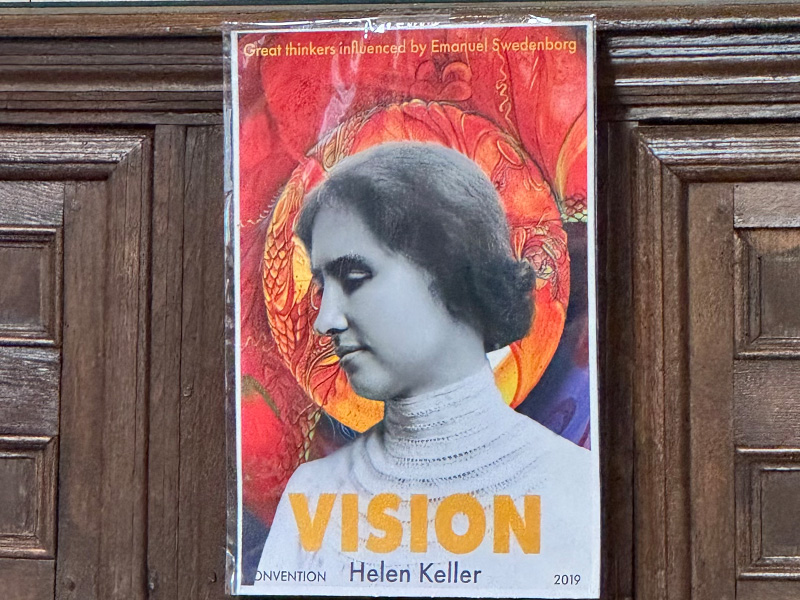
The reason we find celebrity is connected to the three stories that blew Swedenborg’s anonymity. Our various “Famous Names” list (mine has seventy-five on it) boasts all these well-known people in history who read Swedenborg sympathetically and with great interest: Blake, Balzac, Baudelaire, Borges, Frost, the Brownings, Coleridge, Goethe, Emerson, Yeats, and Strindberg, among others. Swedenborg’s breathtaking picture of what’s going on in our cosmos, in our world, and in our souls inspires great writers. The very transformative vision that turned off most traditional Bible and theology scholars inspired a long list of creative masters. I very much enjoy the irony that the very reason why Swedenborg wanted anonymity ended up creating a fair bit of celebrity.
—Rev. Dr. Jim Lawrence
president@swedenborg.org
Read the full November 2026 issue.
Meet Jim Lawrence
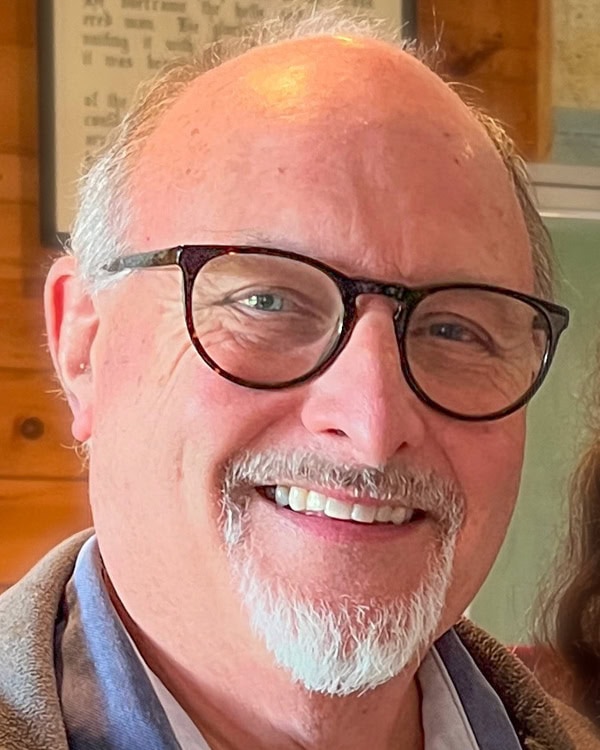
Rev. Dr. Jim Lawrence is the president of the Swedenborgian Church of North America. He was the dean of the Center for Swedenborgian Studies for 21 years prior to being elected President in 2022.