By Dell Rose
Every tradition that claims a special revelation eventually confronts a fork in the road. Down one path lies dissolution: the sacred texts become literature, the doctrines become metaphors available for endless private reinterpretation, and the community that once gathered around a shared vision of God dissolves into a loose affinity group united by nostalgia rather than conviction. Down the other path lies petrifaction: the texts become a fixed code, the historical moment of their writing is mistaken for eternity itself, and the community narrows into a sect defined chiefly by what it excludes. Swedenborgian Christianity, the tradition that traces its origin to the theological writings of Emanuel Swedenborg (1688–1772) and finds institutional expression in bodies such as the Swedenborgian Church of North America, the General Church of the New Jerusalem, and kindred New Church communities, has faced this fork since its inception and arguably faces it now with renewed urgency. A movement that in the nineteenth century numbered influential adherents among scientists, poets, and reformers and that once seemed poised to reshape American religious consciousness today exists as a small, dispersed, and often uncertain body, torn between those who would reduce Swedenborg’s writings from a source of inspirational quotations compatible with any belief whatsoever and those who would enshrine every sentence of the writings as propositionally and literally binding and immune to historical or scientific correction.
This essay proposes a third way. It borrows its method, though not its content, from a document produced by another tradition wrestling with an analogous crisis: Emet Ve’Emunah: Statement of Principles of Conservative Judaism, issued in 1988 by the Jewish Theological Seminary, the Rabbinical Assembly, and allied lay organizations. That document does not resolve the tension between fundamentalism and dissolution by splitting the difference or by vague appeals to moderation. Instead, it offers something more interesting: a coherent account of how a tradition can hold fast to the reality of revelation, the authority of an ongoing interpretive process, and the legitimacy of internal pluralism, all at once. It shows how a community can affirm that God has spoken decisively without pretending that the human reception of that speech is exempt from history, reason, and continued development. What follows is an attempt to translate that structure of thought, not its Jewish content, which remains particular to Judaism, into a comparable architecture for Swedenborgian theology: a via media that is conservative in the true sense of the word, meaning not rigid but committed to conserving what is essential while allowing what is accidental to breathe and grow.
The first and deepest choice any Swedenborgian theology must make concerns the nature of Swedenborg’s own claim: that he was granted, over nearly three decades, an opened spiritual sight by which he perceived the inner sense of Scripture and the structure of the spiritual world, and that he set down what he saw and heard in the writings. Two temptations present themselves. The fundamentalist temptation treats every sentence of the writings as if it were dictated syllable by syllable so that a comment Swedenborg made about eighteenth-century astronomy or about the customs of a particular spiritual society carries the same binding force as his account of the Divine Human or the doctrine of correspondences. The dissolving temptation goes the other way: it treats the writings as merely one gifted man’s spiritual literature, an inspiring but ultimately optional artifact, no more binding than a beautiful poem, its truth claims quietly bracketed so that the reader may extract whatever resonates and discard the rest.
A conservative Swedenborgian via media rejects both. It affirms that revelation is real: that something more than human invention broke through in the opening of Swedenborg’s spiritual sight and that the doctrines he articulated concerning the Lord, the Word, charity, and the life after death disclose truth that human reason alone would not have reached. At the same time, it insists that revelation was received by a particular man, in a particular century, writing in a particular language for readers who shared his assumptions about the physical universe. The content of revelation is divine; its clothing is human. To confuse the clothing with the body is the fundamentalist error. To imagine that removing the clothing leaves nothing at all is the error of dissolution. The task of a living Swedenborgian theology is the same task Conservative Judaism assigns itself with respect to Torah: to distinguish, through careful, communal, historically literate interpretation, the enduring doctrine from its incidental historical vesture, without ever concluding that because the vesture is historical, the body it clothes is therefore invented.
This means, concretely, that later Swedenborgians are entitled and indeed obligated to read the writings in light of what has been learned since 1771: about cosmology, about the ancient Near East, and about the psychology of religious experience. It does not mean that such learning gives anyone license to discard the doctrine of the Lord’s Divine Human, or the reality of a spiritual world, or the teaching that Scripture holds an internal sense. Those are not incidental vestures; they are the body of the revelation itself. A conservative Swedenborgian theology must be able to say, with confidence and without apology, which is which, while remaining humble that reasonable, committed readers within the tradition may draw the line in somewhat different places.
If revelation supplies content, then doctrine and order supply structure, the New Church equivalent of what Judaism calls halakhah. Here again a bifurcation threatens. One wing of the tradition risks a kind of doctrinal antinomianism: since the New Church has never developed a centralized magisterium comparable to Rome’s, and since congregational polity leaves considerable latitude to local societies, it can seem as though there simply is no operative doctrinal order at all, each reader an island, each society its own denomination, doctrine reduced to whatever a given minister or study circle currently finds congenial. The opposite wing treats a particular nineteenth or twentieth-century systematization of doctrine, a catechism, a set of doctrinal classes, or a specific reading of the writings on marriage or on the nature of hell as though it were itself part of the revelation, unchangeable and beyond reconsideration.
The corrective borrowed from the Conservative Jewish model is instructive. Halakhah, that document insists, is indispensable, not optional, not merely one lifestyle choice among others, precisely because it is a concrete, communal expression of the encounter with God. But halakhah has never been monolithic; it has always developed through interpretation responsive to changing circumstances, while the burden of proof rests on those who would change it, not on those who would conserve it. Applied to Swedenborgian life, this yields a clear principle: New Church doctrine and practice, the order of worship, the sacraments, the ethical teaching on marriage, vocation, and the moral life, and the doctrine of charity and use are not negotiable decorations that each generation may discard at will. They are the concrete form the tradition takes as it seeks to embody, in worship and conduct, the truths disclosed in the writings. Yet neither are they frozen. The writings themselves teach that truth unfolds progressively, that the church is perfected by degrees, and that genuine spiritual life looks to uses, that is, to the actual, changing needs of human beings in their own time. A conservative Swedenborgian order, then, will hold firmly to its doctrinal center, the acknowledgment of the Lord, the life of charity, and the reality of an internal sense to the Word, while allowing considerable, disciplined variation in liturgical form, pastoral practice, and applied ethics, always placing the burden of justification on those proposing change rather than treating tradition itself as the thing that must justify its own continuation.
A further principle emerges directly from this: pluralism is not a regrettable compromise but a positive good, so long as it operates within acknowledged boundaries. Just as different Jews throughout history perceived the revelation at Sinai, each according to their own spiritual capacity, so too have different readers of the writings, in different centuries and cultures, received the doctrine of the Divine Human, or of the nature of the spiritual world, with different emphases and sensibilities. Some Swedenborgians have stressed the mystical, experiential dimension of regeneration; others the rational, doctrinal architecture of the writings’ teaching on discrete degrees and correspondence; others the ethical and social implications for education, marriage, or the treatment of the poor. None of these emphases are illegitimate. What would be illegitimate is a reading that denied the Lord’s Divine Human altogether, or that treated the doctrine of an inner sense to Scripture as a merely metaphorical flourish rather than a real, disclosed truth about how revelation operates. Pluralism operates inside the walls of the essential doctrines; it does not entail the removal of the walls.
This distinction, pluralism bounded by a shared doctrinal core rather than a relativism that dissolves the core into personal preference, is precisely what separates a conservative via media from dissolution. A tradition that says “believe whatever helps you” has not achieved openness; it has achieved incoherence, because it has ceased to say anything distinctive at all. A tradition that says “believe exactly this, in exactly these words, or you do not belong” has not achieved fidelity; it has achieved brittleness because it has confused the accidents of one generation’s formulation with the substance of the revelation. The middle way insists that there is a real, identifiable center, the acknowledgment of one God in the Lord Jesus Christ, the authority of an internal sense within the Word, the necessity of a life of charity and use, and the reality of heaven and hell as states into which the whole human character enters after death, around which legitimate diversity of interpretation and practice can flourish without becoming its opposite.
Any conservative theology must also show that it can face suffering honestly rather than either explaining it away with cheap certainty or dissolving the question into despair. Swedenborgian theology possesses unusual resources here because its doctrine of freedom, that no one is compelled by the Lord to good or to evil and that heaven and hell alike are freely chosen through the whole shape of a life’s loves, provides a framework in which human evil is neither excused as illusory nor blamed on an arbitrary deity. A conservative reading of this doctrine refuses two temptations: it refuses the fundamentalist temptation to treat every particular suffering as a legible, deserved punishment, and it refuses the dissolving temptation to abandon the doctrine of providence altogether and treat the universe as morally indifferent. Instead, it holds, as the Jewish statement holds regarding the Holocaust, that no theology can fully justify the suffering of the innocent, even while affirming that human freedom, and its abuse, accounts for a great deal of the world’s evil, and that the Divine Providence works, patiently and often invisibly, toward an ultimate good it does not force upon us. This is a harder position to hold than either alternative, and for that reason it is the more honest one.
Swedenborg’s own eschatology, centered on his account of a Last Judgment already accomplished in the spiritual world in 1757, offers fertile ground for the same distinction between revolutionary and gradualist readings that any living eschatology must confront. A fundamentalist reading might treat this teaching as license for a triumphalist, world-denying sectarianism, certain that the true church is a small remnant and the rest of history a matter of indifference. A dissolving reading empties eschatology of content altogether, treating talk of judgment, heaven, and regeneration as merely psychological metaphor with no bearing on ultimate reality. The conservative via media, consistent with the doctrine of use at the heart of Swedenborgian ethics, understands the New Church not as a triumphant remnant awaiting vindication but as a patient, gradual work, a “new church” understood primarily as a new spiritual state slowly leavening human consciousness, growing not inevitably, not steadily, and perhaps not in our lifetimes through the accumulated small redemptions of ordinary people living lives of genuine charity and use. This gradualist hope refuses both the impatience that curdles into sectarian militancy and the despair that curdles into a vague spirituality with no future to hope for at all.
A conservative Swedenborgian theology, finally, must decide how it relates to other Christian communions and other faiths, and here too a middle path presents itself. Swedenborg’s own teaching that people of every nation and religion who live according to their conscience have a place prepared for them in heaven offers grounds for a stance that avoids both triumphalism and indifferentism. The New Church need not claim that salvation is impossible outside its own explicit doctrines; the writings themselves forbid such a claim, nor need it conclude that its own distinctive teaching on the Lord’s Divine Human and the internal sense of Scripture is therefore dispensable or merely one option among equally valid others. It can hold, with theological humility, that God’s saving work extends beyond the visible boundaries of the New Church while still insisting that the New Church possesses something true and needed to say to the wider Christian and human family: that genuine faith is inseparable from a life of active charity, that Scripture holds within it a depth the letter alone does not exhaust, and that the human being is intended, uniquely among creatures, to become a vessel of Divine love and wisdom through freely chosen use.
What, then, does the person formed by this via media look like? Following the pattern of the “ideal Conservative Jew” with which the Jewish statement concludes, we might describe an ideal Swedenborgian along three lines. First, such a person is a willing Swedenborgian, whose ordinary life, work, family, and civic engagement are themselves understood as the primary arena of religious life, since the writings teach that genuine regeneration occurs not chiefly through withdrawal into ritual but through the conduct of one’s use in the world. Second, such a person is a learning Swedenborgian, unafraid to read the writings alongside history, science, and the wider Christian tradition, trusting that careful study deepens rather than threatens genuine faith. Third, such a person is a striving Swedenborgian, aware that regeneration is the work of a lifetime, that no one arrives at final certainty or final holiness in this life, and that the opposite of this patient striving is not humility but the complacency that mistakes either rigid certainty or comfortable vagueness for faith.
The choice between nothingness and fundamentalism is, in the end, a false choice, though it is the choice most religious communities under strain feel forced to make. A conservative vision of Swedenborgian theology, (conservative not in the political sense but in the sense of conserving what must be conserved while allowing genuine, bounded growth in everything else) offers a third way. It takes the writings with full seriousness as a real disclosure of divine truth, while refusing to confuse that truth with every incidental sentence of their eighteenth-century expression. It maintains a firm doctrinal center while welcoming a wide diversity of interpretation and practice within that center. It faces evil, judgment, and the fate of those outside its own walls without either false certainty or corrosive doubt. This is, admittedly, a harder path to walk than either of its alternatives, since it offers neither the comfort of certainty nor the comfort of endless accommodation. But it is the path most faithful to what a revealed tradition, rightly understood, actually requires of those who would carry it forward: not to abandon the mountain, nor to mistake the base camp for the summit, but to keep walking, purposefully, toward it.
Read the full September 2026 issue.
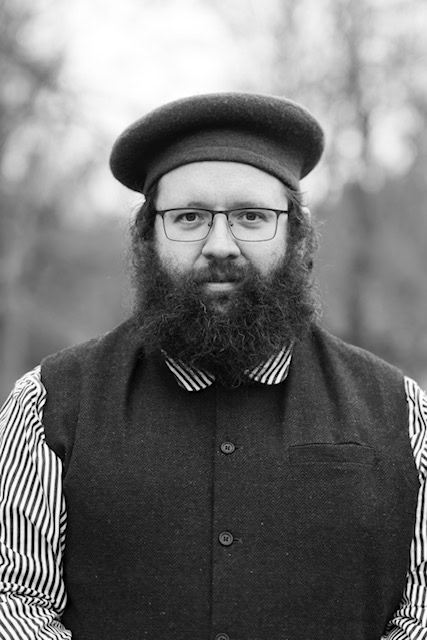
Meet Dell Rose
Dell J. Rose develops and hosts programs for the Swedenborg Library in Chicago and is on the ordination track for the Swedenborgian Church of North America. He holds the position of Swedenborg Doctoral Fellow with the Swedenborg Society in the United Kingdom, and he is a doctoral candidate at the Centre for the History of Hermetic Philosophy and Related Currents at the Universities van Amsterdam.