By Dr. Rebecca Esterson
In the spring of 2026, with the support of the CSS Board of Trustees, I took a partial leave of absence to enroll in a unit of Clinical Pastoral Education (CPE). There were two reasons I decided to do CPE. The first relates to professional development as the Dean of the Center for Swedenborgian Studies. CPE is an important part of our ordination candidates’ learning journey, and I saw the value in experiencing it for myself to better support our students. I am also increasingly involved in teaching students who are preparing for careers in chaplaincy, and it was becoming evident that this work would benefit from having chaplaincy training myself. The second reason was the long-standing calling I have to end-of-life care. This calling has informed my membership in the Threshold Choir, among other activities that have had me regularly at the bedside of people at the end of life in recent years. When an opportunity arose to do CPE clinical hours in a hospice in San Francisco, it seemed like providence had opened a door to an important next stage of my own journey.
My CPE experience required 300 clinical hours, which I fulfilled working at Sutter Hospice. This involved doing two kinds of work: I worked half of the time as a bereavement counselor and the other half providing direct patient spiritual care to people at Coming Home Hospice in the city’s Castro District. Coming Home is a special place. Originally built to be a convent, housing the city’s Sisters of Mercy, the nuns themselves turned the 15-bed residence into a hospice so they could care for the dying during the AIDS crisis. The Sisters eventually sold the building to Sutter Health, who have maintained it as a stand-alone residence for hospice patients ever since. One feels this history keenly when one enters the building, and I often felt the presence of the nuns, the patients, and the countless loved ones who have visited and tended to the needs of the dying in that space over the years. It is indeed a sacred place.
It is impossible to briefly summarize the experiences I had or all the things I learned during this time. Instead of a comprehensive overview, I’ve pulled some entries from my journal. The following are things I learned or heard from patients, clients, teachers, and colleagues over the course of the experience:
- There is something in common between the inability to communicate with words at the end of life and at the beginning of life.
- A chaplain comes into a hospice setting moving at a different pace than all the other people working there. It can feel like there is a lot of empty time, like there should be more to “do.” But moving at a slower, more mindful pace is a benefit to everyone there, as other professionals are often busy and rushed. Taking time to sit and meditate before or after visiting patients can help move into a fuller intentionality around this different pace.
- Family systems are like a mobile: carefully balanced. When someone dies, the whole system goes wonky. A lot of the work of grief is addressing the resulting imbalance, adapting to life in a new system, and finding a new balance.
- A client’s husband comes to her in the form of birds, mostly hummingbirds.
- Watching a loved one die is like watching the train leave the station. There’s nothing you can do to stop it, and you are left alone on the platform.
- Helpful phrases in grief work: “The presence of absence,” “grief brain,” “grief eyes,” “secondary loss,” “dosing grief.”
- The three rules of widowhood: my love, my grief, my rules.
- Some people are Death Doulas (who “do”). Others are Death Be-las, who bring presence rather than doing.
- Be careful with touch at the very end. It can have the effect of bringing people back into their bodies, delaying or interrupting their death.
- Humming is especially helpful when you are with a patient who is restless.
- Client does not want to be the conveyer of messages from her dead mother.
- A hundred years ago, patients at the end of life were given a mixture of drugs (Brompton cocktail) that included cocaine, for pain relief but also to make them more alert and social so that they could share what they were seeing and hearing. Today we give them morphine, which makes people sleepy or unconscious. We are having fewer conversations with dying people today.
- A helpful ritual for those who work with the dying: write the name of one who recently died on a dissolvable piece of paper. Light a candle and thank them for letting you into their life, and drop the name into water.
- Anger can be a vehicle for a grieving person to be able to tell their story.
- Visiting the hospital places (hallways, nurses’ stations, waiting rooms, even the bathrooms) where the client’s husband received treatment is exposure therapy. Moving slowly in places where everything was rushed and urgent, she can revisit a time that was traumatic but also precious, as everyone there was working to try and save his life.
Why CPE is Important for Our Ministers
Completing a unit of CPE is currently a requirement for those seeking ordination in the Swedenborgian Church of North America, as it is in many other denominations. Having done a unit myself, I am even more convinced of the importance of this experience for those entering the ministry. There are two components of every CPE unit. As mentioned, I was required to complete 300 hours of clinical work, which is intended to develop pastoral and professional skills in spiritual care through direct experience. In addition, I was required to complete 100 hours of education, which involved working with specially trained teachers and a cohort of other CPE students who would come together one day a week to reflect on the clinical work, examine our own inner processes, and offer feedback. Both of these areas, the clinical time and the education and reflection time, are essential for ministry training. Taken together, these experiences offer critical lessons on professional boundaries, ethics, and the many complex interpersonal challenges that inevitably come with ministry. These are skills that benefit not just our ministers and their parishioners, but the health of our church as a whole. One example of where CPE education informed my own thinking about church governance comes from the concept of “dual relationships.” Sometimes in professional or pastoral settings, there can be a need for two people to work together who have two or more different kinds of relationships between them. This might be the case, for instance, if a parishioner who is a church board member is also a relative or close friend. These dual relationships are often unavoidable, especially in smaller organizations such as ours. But it is still important to recognize them, name the complications they create, and work openly with the larger community to avoid conflicts of interest or other boundary issues. CPE is a place where students not only learn about such dynamics but practice dealing with them professionally and in a context that offers support and honest feedback.
If you encounter ordination candidates who are doing CPE or recently completed a unit of CPE, consider asking them about their experience and what they have learned from it. It is truly an enriching experience, and I’m grateful to have had it.
Read the full October 2026 issue.
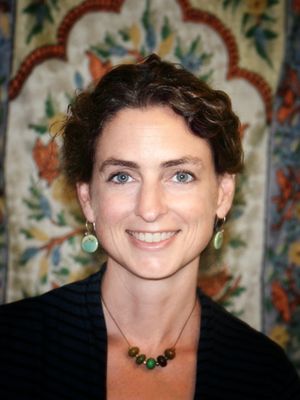
Meet Rebecca Esterson
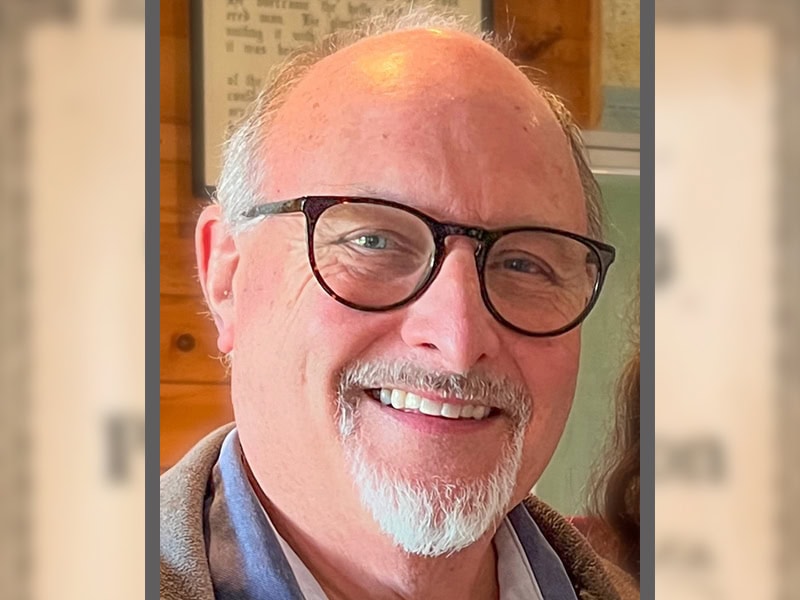
Dr. Rebecca K. Esterson is the dean of CSS and the Dorothea Harvey Professor of Swedenborgian Studies. She teaches in the Department of Sacred Texts and Their Interpretation at the GTU in Berkeley, California and is a member of the Swedenborg Society of the East Bay.