By Rev. David Millar and Rev. Sarah Walker
Are you seeking a deeper connection to Emanuel Swedenborg’s
profound writings and practical ways to integrate them into your daily life? The Logopraxis Institute offers a unique approach to spiritual development that is both introspective and community-focused.
What is Logopraxis?
The term “Logopraxis” literally means “to practice the Word,” combining the Greek words Logos (“Word”) and Praxis (“to practice”). This approach was born from a desire to make Swedenborg’s ideas accessible and applicable to everyday life. It recognizes that for many, these spiritual texts often remain intellectual pursuits rather than guides for day-to-day moments and struggles.
The Logopraxis approach was founded over twenty-five years ago, starting with a small group and expanding today to sixteen “Life Groups” worldwide, many of which meet online. These groups span continents and time zones, fostering a rich, diverse environment where practitioners from various cultures come together. This global collaboration underscores the Logopraxis focus on embracing variety and diversity in spiritual understanding. It is recognized that all individuals are continuously developing their understanding of truth, and that no one possesses the ultimate truth. Practitioners are encouraged to listen for what resonates with their own inner landscape in what others share. The multifaceted illustrations of the Word at work in each other’s lives contribute to a rich, collective understanding, forming an image of the Divine Human being made present, as described in Matthew 18:20: “Where two or three are gathered together in My Name, I am there in the midst of them.”
The Heart of Personal Practice
Logopraxis follows a two-week cycle where each practitioner reads a specific portion from Swedenborg’s writings. The aim is to identify a concept of truth from the text and formulate a personal task to test in their daily life. This task is not about achieving a specific outcome but serves as a prompt to remember and reflect on the chosen concept, allowing for a personal illustration of its principles to emerge.
These spiritual texts are not intended to instruct us about others, but rather to support our own personal spiritual rebirth. The guiding question during reading is always: “How does this speak to my own inner life of feelings and thoughts? How does this describe the spiritual world within me?” For instance, if a text discusses life on other planets, the history of humanity, the marriage of the masculine and feminine, or the afterlife in heaven and hell – —the practitioner considers these as symbolic illustrations of what occurs within the mind when divine love and wisdom attempt to enter. So they don’t describe people and places “out there,” but instead the receptions and resistances to life from the Divine within oneself.
Working for the Whole
From its very beginning, Logopraxis has been an experiment in spiritual community. The approach is two-fold: dedicated to the spiritual growth of the individual, and also for the sake of the whole—the group, the community, and ultimately, the Lord. At the end of the two-week cycle, practitioners meet with their Life Group to share what arose during their attempt to work with the task, or even just to remember it! This individual work contributes to the collective, providing material to share with the group, which is a core aspect of what it means to love one’s neighbor within a Logopraxis context.
The emphasis is not on getting it right or on judging what is shared, but on trusting the process. Whatever emerges is considered to be under the Lord’s providence and precisely what is needed for the group, even if it feels insignificant. It can be likened to the biblical account of the barley loaves and fishes: the Word, as the Lord, takes what is brought and transforms it into a feast to nourish many. Time and again, practitioners report gaining insights they would not have seen otherwise, as unique perspectives weave together to form a beautiful tapestry of shared understanding.
What makes Logopraxis Different?
Several elements distinguish Logopraxis from other spiritual growth groups. Fundamentally, the Word is firmly at the center: it serves as the Facilitator, Mediator, Healer, and Therapist. Facilitators guide participants back to the Text, reminding them that whatever arises in their spiritual process, the Word is capable of supporting them. While individual experiences differ, universal patterns in spiritual processes are taught through the Text.
During group meetings, the focus is maintained on universal spiritual principles rather than excessive personal details, which can distract from listening and connecting with these deeper truths. A neutral sphere is also maintained during sharing and listening, supporting genuine hearing and allowing the speaker to be fully present without external affirmations or criticisms that might influence their inner state. While this can initially feel unconventional, the unique quality of the Life Group’s sphere, where people are present with one another through the medium of the Word, is a recurring positive comment from practitioners.
Another unique aspect of Logopraxis is its emphasis on examining the sense of self. Traditional self-examination often focuses on what we perceive as me, but the teachings clarify that all life flows in, and we are neither inherently good/true nor evil/false. Instead, the practice is to examine the sense of self that believes it is me, which is a distinct endeavor. Historically, there has been an idea that shunning evils means pushing away bad thoughts until they are gone. However, Logopraxis teaches that greater enlightenment brings a clearer perception of what resists Divine life. Thus, the work is not to eliminate hellish thoughts but to see them clearly without identifying with them or claiming them as one’s own—and this is where the transformative work lies.
While this may seem deeply introspective, it significantly enhances the quality of people’s lives. Any negative state of mind stems from an identification with what belongs to the hellish proprium, or sense of being. At the core of these states is a belief in a sense of self that claims incoming experiences as its own. By working with Swedenborg’s teachings on the nature of this self versus the nature of the Divine, a life changing impact can be made on how we respond to others and the world around us. Becoming more objective when negative states arise is an act of love in the form of truth. The more one comes to know hell, the more one comes to know heaven and the Lord and ultimately, this enables us to be more effective vessels of Divine Love.
New 8-Session Introductory Course
The Logopraxis Institute has created a new course to introduce newcomers to this transformative approach. The 8-session program is designed to be short enough to avoid overwhelming newcomers yet long enough to establish a consistent spiritual rhythm. Each session includes short readings from Heaven and Hell, an ideal foundational text for spiritual work, as it mirrors the process of newly awakening spirits entering the spiritual world. There is no cost for this course, as all that is required is a willingness of heart to engage with the material and an openness to the process of inner change.
Read the full issue of the January/February Messenger.
Meet David Millar
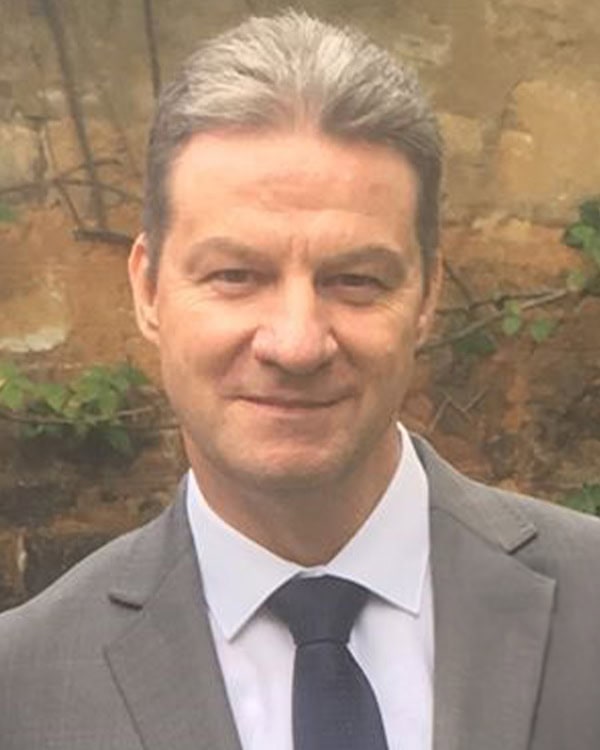
Rev. David Millar is the Director for Spiritual Training of the Australian New Church College (ANCC) out of which The Logopraxis Institute is funded. With a passion for making Swedenborg’s writings accessible, Logopraxis formed in 2004 as he worked with a small group in Adelaide, South Australia. Since then, the approach has grown to include 16 Life Groups and 11 facilitators, with many of these meeting online across various continents and time zones. David’s vision for Logopraxis centers on the Word as the primary facilitator for transformative growth and community, encouraging practitioners to discover universal spiritual patterns within the texts.
Meet Sarah Walker
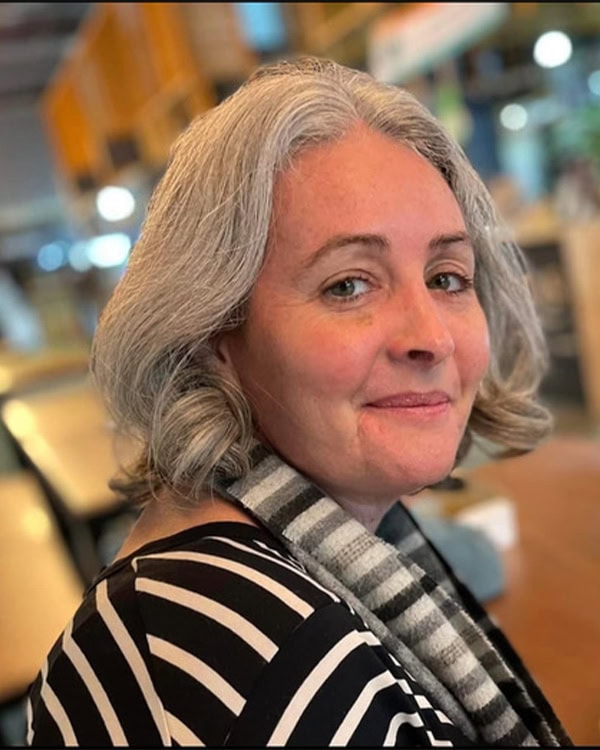
Rev. Sarah Walker is the Assistant to the Spiritual Director for the Australian New Church College (ANCC) and is also a Life Group facilitator. She plays a key role in guiding practitioners through the Logopraxis approach, emphasizing personal reflection on Swedenborg’s writings and their application to one’s inner life. Sarah is particularly passionate about helping individuals understand how these texts describe the “spiritual world within” and how the practice of Logopraxis supports a unique examination of the sense of self which simultaneously enhances a deeper connection to Divine Love.