The Social Justice Committee of the Swedenborgian Church of North America is excited to announce the second event in it’s 2026 Speaker Series on social justice issues:
Queer Ecology: Exploring LGBTQ+ Identities And Environmental Advocacy led by Parker McMullen Bushman on Wednesday May 6, 2026, 7–8:30 PM ET on Zoom.
Parker McMullen Bushman of Ecoinclusive Strategies will be leading a workshop on Queer Ecology: Exploring LGBTQ+ Identities And Environmental Advocacy. In this workshop, participants will explore the intersection of LGBTQ+ identities and environmental advocacy in the realm of queer ecology. This workshop delves into the ways in which LGBTQ+ individuals engage with nature, ecological spaces, and environmental activism and will give a greater understanding of nature through queerness disrupting the myth of heteronormativity in nature. Participants will gain insights into inclusive approaches to environmental advocacy, promoting acceptance, visibility, and justice for queer communities within ecological discussions.
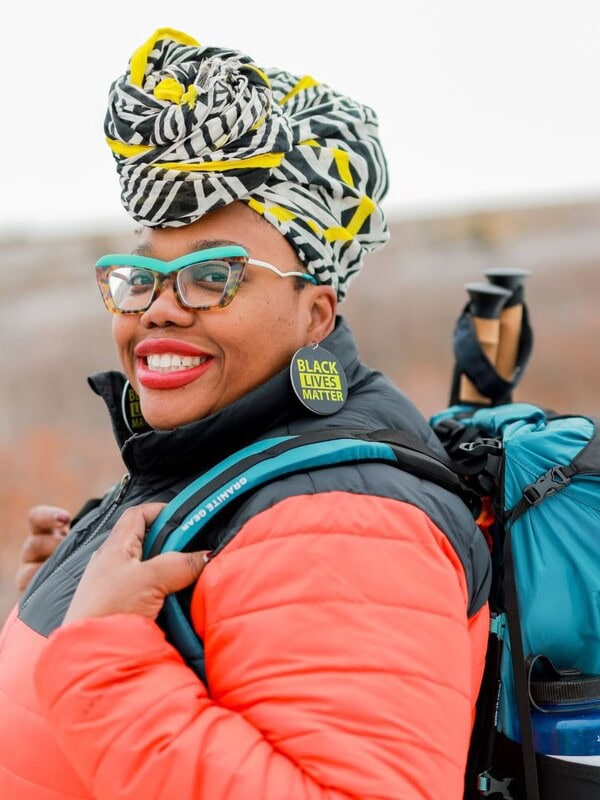
Parker is an innovative leader, speaker, and facilitator dedicated to creating transformative experiences that promote diversity, equity, inclusion, and justice across industries and for the environment. As the CEO of Ecoinclusive Strategies, founder of the Summit for Action (www.summitforaction.org), and dynamic social media persona KWEEN WERK (www.instagram.com/kweenwerk), Parker blends over twenty-five years of experience in environmental education, DEI consultation, and organizational development. Recognized by Outside Magazine as one of the “20 Most Influential People in the Outdoor Industry,” Parker leads initiatives that center marginalized voices in conservation, recreation, and beyond.
Parker was recently interviewed by Rev. Sage Cole on the Be Love Podcast. You can listen to it here: worshipislife.substack.com/p/be-love-love-really-allows-people
In this powerful and deeply personal conversation, Parker McMullen Bushman invites us to rethink everything we’ve been taught about nature—starting with the idea that it exists somewhere “out there,” separate from us. “We are all nature,” they remind us. “We’ve been talking about the natural world this whole time because we are part of it.” This reframing sits at the heart of their work and forms the foundation of their upcoming workshop, Queer Ecology: Exploring LGBTQ+ Identities and Environmental Advocacy.
Drawing from their upbringing in the Bronx, Parker challenges the dominant narrative that cities are somehow disconnected from the natural world. “We don’t think of cities as nature,” they explain, “but it is—just nature that we’ve changed.” By tracing how this false separation emerged, particularly through early conservation movements that framed wilderness as something to be protected from humans, they highlight how these ideas have shaped not only environmental policy but also who feels welcome in environmental spaces.
Parker weaves together environmental history, personal storytelling, and social critique to show how systems of exclusion—racism, classism, and heteronormativity—have long been embedded in environmentalism. From not visiting a national park until their twenties to witnessing stark differences in neighborhood pollution as a child collecting cans, their experiences reveal how environmental awareness often comes not from formal education, but from lived reality. “No one told me I was recycling,” they reflect. “I was just trying to make money. But I noticed things—who had clean neighborhoods, who didn’t—and I started asking why.”
That questioning became a catalyst for activism and, ultimately, a career. But Parker is clear: access to environmental pathways is not equally distributed. Their work calls attention to the ways marginalized communities are disproportionately impacted by environmental harm—while also being excluded from the spaces where solutions are shaped.
One of the most compelling frameworks Parker offers is the idea of “indicator species.” In ecology, these are organisms whose health signals the overall condition of an ecosystem. Parker extends this concept to people, “Our most marginalized communities—people of color, trans folks, people with disabilities—they’re our ‘indicator species.’ When they are being harmed, it’s a warning of what’s coming for everyone.” It’s a striking reminder that environmental justice is inseparable from social justice.
Through a queer ecological lens, Parker invites participants to dismantle binaries, not just between human and nature, but between identities, disciplines, and ways of knowing. Their approach is rooted in interconnectedness, reciprocity, and care, values long held by Indigenous communities and increasingly vital in the face of climate crisis.
This workshop is not just about learning, it’s about unlearning. It’s about recognizing that the systems that separate us from nature are the same ones that separate us from each other. And it’s about imagining new ways forward, grounded in inclusion, equity, and collective responsibility.
Join Parker McMullen Bushman and the SJC of the SCNA on Wednesday, May 6, for a transformative exploration of what it means to belong—to the planet, to our communities, and to ourselves.
Register at tinyurl.com/6sv7t4b6
Read the full issue of the May Messenger.